It’s 2026, a high-conviction token pool launches on Solana, your custom sniper bot instantly detects the liquidity, calculates the dynamic curve, and fires a swap transaction via Raydium or Jupiter API. Instead of a successful signature, your terminal throws a lethal error: RPC Error: Transaction simulation failed: Instruction reverted.
By the time your script processes the failure, the token has already pumped 500%. On Solana, a simulation failure means your transaction was rejected by the local validator validator node before it could even hit the mempool. For high-frequency traders and MEV searchers, this is the ultimate profit killer. Here is the engineering protocol to bypass Solana simulation blocks in 2026.
The Core Triggers behind Solana Simulation Failures
Through advanced multi-asset chain monitoring and technical execution analysis in 2026, we have isolated the top three structural causes for this error:
- Slippage Tolerance Breach (Slippage Exceeded): The token price moved faster than your RPC node’s block ingestion rate. The pre-execution check on the smart contract recognized that the final output would violate your strict
maxInorminAmountOutparameters, forcing an immediate revert to save your gas. - Stale Account State (AccountNotFound / Invalid Account Data): Your bot is querying a congested public RPC endpoint. The automated routing path is trying to swap through an AMM pool state that has already changed or closed in the current slot, creating a structural mismatch.
- Dynamic Priority Fee Inadequacy: In 2026, standard priority fees are completely obsolete. If your compute unit price limit doesn’t dynamically scale with the local network hotspot, validators will discard your simulation package during transaction sorting.
The Technical Fix: Async Pre-Flight Optimization & CU Management
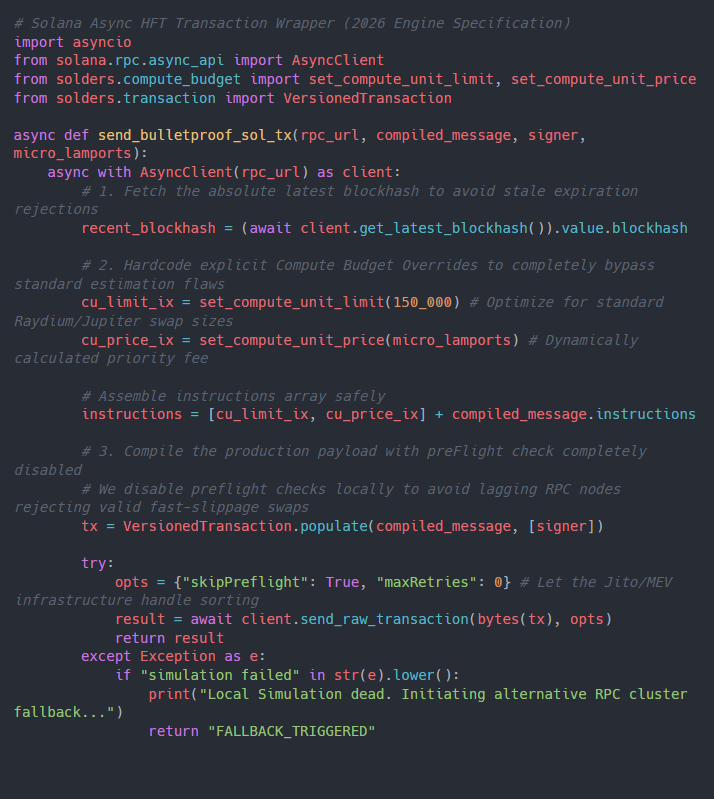
To stop your Solana HFT bots from throwing simulation failures, you must implement dynamic compute unit allocation and route transactions directly via private Jito block engines or premium staked RPC nodes. Use this production-grade asynchronous Python template to structure your transactions natively.
The 2026 On-Chain Asset Shield: Infrastructure Hardening
Relying entirely on a single open-source RPC connection or a poorly optimized wallet architecture to handle high-velocity Solana trading or Layer-2 Base scaling is a major structural bottleneck. Advanced algorithmic desks execute their risk management through diversified institutional hubs.
- The Web3 Wallet Optimization (OKX): Features advanced, native multi-node routing that updates Solana and Base gas limits dynamically within milliseconds. It includes built-in MEV sandwich protection to safeguard your on-chain swap execution. Connect your tech stack via the OKX Developer Portal.
- The High-Frequency Funding & Arbitrage Venue (Bitget): When on-chain gas fees render decentralized arbitrage unprofitable, instantly hedge your open spot risk via unified sub-account setups with unmatched default rate limits. Access your gateway via Bitget VIP Quant Routing ($80 Bonus).